

Male Pattern Hair Loss
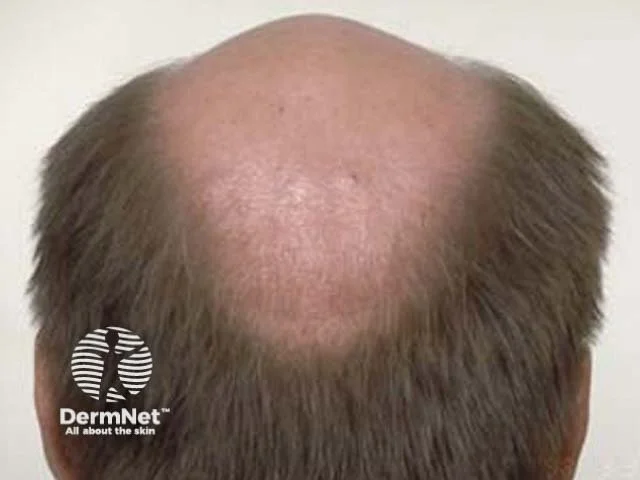
Source: dermnetnz.org
Male Pattern Hair Loss, also known as male androgenetic alopecia, is the most common cause of hair loss in men. It affects approximately half of all men by the age of 50 and can begin as early as the late teens or twenties.
The condition develops gradually and is characterised by a receding hairline, thinning over the crown and, in some men, progressive baldness. While male pattern hair loss is not harmful to physical health, it can have a significant impact on confidence and self-esteem.
At Mermaid Beach Dermatology, our Specialist Dermatologists provide comprehensive assessment and evidence-based treatments to slow hair loss, preserve existing hair and stimulate regrowth where possible.
Early treatment offers the best opportunity to maintain your hair.

About Male Pattern Hair Loss
-
Yes. Male pattern hair loss is largely inherited and may be passed down from either your mother's or father's side of the family.
-
No. Wearing hats does not cause male pattern hair loss.
-
Stress does not cause androgenetic alopecia, but significant stress may trigger telogen effluvium, a separate condition that causes temporary hair shedding.
-
Finasteride is one of the most effective medical treatments available for male pattern hair loss. It slows progression in many men and can improve hair density when started early.
-
Not necessarily. Even men with established hair loss may benefit from treatment, although earlier intervention generally produces better results because more functioning hair follicles remain.
-
You should arrange a consultation if you notice:
A receding hairline.
Thinning at the crown.
Progressive hair loss.
Excessive hair shedding.
Hair loss affecting your confidence or quality of life.
Hair loss associated with scalp redness, scaling or itching.